Daniel Boone in the Revolutionary War
NOTE: This article was also published by The Boone Society, Inc. in their publication the Compass in July 2026, Volume 30, Issue 3, pages 8 - 11.
I joined the Sons of the American Revolution under my direct ancestor Daniel Boone. When asked to start a new SAR Chapter in honor of Col. Daniel Boone, I attended the Annual State Society Meeting of the SAR to get the process started. I was surprised when people later approached me and asked, “Was Daniel Boone involved in the Revolutionary War?” Most who know about Daniel Boone remember him as a hunter and explorer but not about his extensive service during the Revolutionary War. After frequent questions about Boone’s service, I developed a presentation with PowerPoint and have traveled to states of Kentucky, Tennessee, and Illinois as well as around North Carolina to educate audiences about Daniel Boone’s Revolutionary War Service.
Boone’s military service before the Revolutionary War is well documented. He served as a wagoner or teamster for the British army during the French & Indian War (1754-1763) and experienced the ambush at Braddock’s Defeat. He was also in the North Carolina militia, participated in the Anglo-Cherokee War (1758-1761), and was at the Long Island of the Holston, when the Cherokee and British signed a treaty ending that War. After moving into Virginia in 1773, he became a Lieutenant and then a Captain in the militia in Fincastle County, which was in the British Colony of Virginia. When Lord Dunmore’s War erupted in western Virginia, Boone served as a Captain commanding three forts.
It wasn’t until after settlers began building Fort Boonesborough in the summer of 1775 that they learned about the Revolutionary War earlier being ignited in New England in April. The war moved into western Virginia in 1776 with initial attacks by Native American tribes being supported and sponsored by the British. Most of the fighting and defense provided west of the Appalachians was by a fairly well-trained militia. The following briefly outlines Boone’s service during the war. A great book that describes part of the war that Boone experienced is Virginia’s Western War 1775 – 1786 by Neal O. Hammond and Richard Taylor.
Promoted to Captain in the Virginia Militia. In 1774, Boone had been promoted from Lieutenant to Captain in the militia of Fincastle County, Virginia. On January 31, 1777, Fincastle County, Virginia was organized into the three new counties of Montgomery, Washington, and Kentucky. Boone was appointed a Captain in the Kentucky County militia, and the militia held its first muster in three locations on March 5, 1777.
Attacks at Fort Boonesborough in 1777. The British at Fort Detroit were supplying the Native tribes, so they could attack and try to drive settlers out of the region west of the Allegheny and Appalachian Mountains. Attacks against the settlements increased in 1776 and accelerated in 1777. The first incident at Fort Boonesborough was on March 7, 1777. The fort was successfully defended by twenty-two riflemen during another attack on April 24, when Boone and others were wounded, and one man was killed. On May 23, the Shawnee again laid siege for three days at Boonesborough injuring three men before withdrawing. Captain William Bailey Smith led forty-eight militiamen from North Carolina and reached Boonesborough in September 1777 to help aid and fortify the fort. Boone’s nephew, Daniel Bryan, was among these men. One hundred fifty more soldiers arrived a few days after Smith’s men.
Capture, Escape, and the Siege of Fort Boonesborough in 1778. In February 1778, Boone and the salt makers were captured by the Shawnee at the Lower Blue Licks on the Licking River. When Boone was captured by the Shawnee, Rebecca waited for his return for two months. Assuming he may be dead, she returned with most of her family to North Carolina. In June 1778, Boone escaped and then spent the summer leading the fortification of Fort Boonesborough. Captain Boone was successful leading the settlers’ defense during the Siege of Boonesborough in September 1778.
Court Martial, Acquittal, and Promotion to Major. After the 1778 Siege of Boonesborough, Boone’s actions during the capture of his men in February 1778 was called into question, which led to his trial for treason at Logan’s Fort. He was acquitted and then promoted to Major in the Virginia militia.
A Year in North Carolina: 1778-1779. In the Fall of 1778, Boone returned to North Carolina and found Rebecca and his family living with William and Mary Boone Bryan on the land where she grew up with her grandparents. Boone spent the winter hunting, and in the spring of 1779 traveled to Charleston to sell his hides and furs where he could get a better price. He also purchased supplies there in preparation for a return to Kentucky. In the summer, preparations were made, and in September 1779, Boone, along with Captain Billy Bryan, led a large migration out of the Bryan Settlement and into Kentucky.
The Battle of Piqua in 1780. (Also spelled Peckuwe, Peckowee, Pekowi, and Pickaway). In response to Shawnee, Lenape, Miami, and British attacks, Colonel George Riogers Clark organized around 1,000 regulars and militia. His mission was to invade the Shawnee supply bases at Chillicothe and Piqua. Daniel Boone participated as a scout, and several members of the Boone and Bryan families also participated. The battle took place on August 8, 1780, at the Shawnee village of Peckuwe on the Mad River in the Ohio Territory. It was the largest battle west of the Alleghenies during the Revolutionary War and considered a victory for Clark, since he was able to drive the Shawnee from some of their towns.
Lieutenant Colonel Appointment. In November 1780, Kentucky County was divided into Jefferson, Lincoln, and Fayette Counties. Fayette County was named in honor of Revolutionary War hero the Marquis de Lafayette, and it was one of the largest counties in Virginia. In February 1781, Daniel Boone was appointed Lieutenant Colonel of Fayette County, Virginia. In this position, he was an officer in the county militia, and he had administrative duties similar to those of a governor of the county. In his administrative position, he served under and reported to the Governor of Virginia.
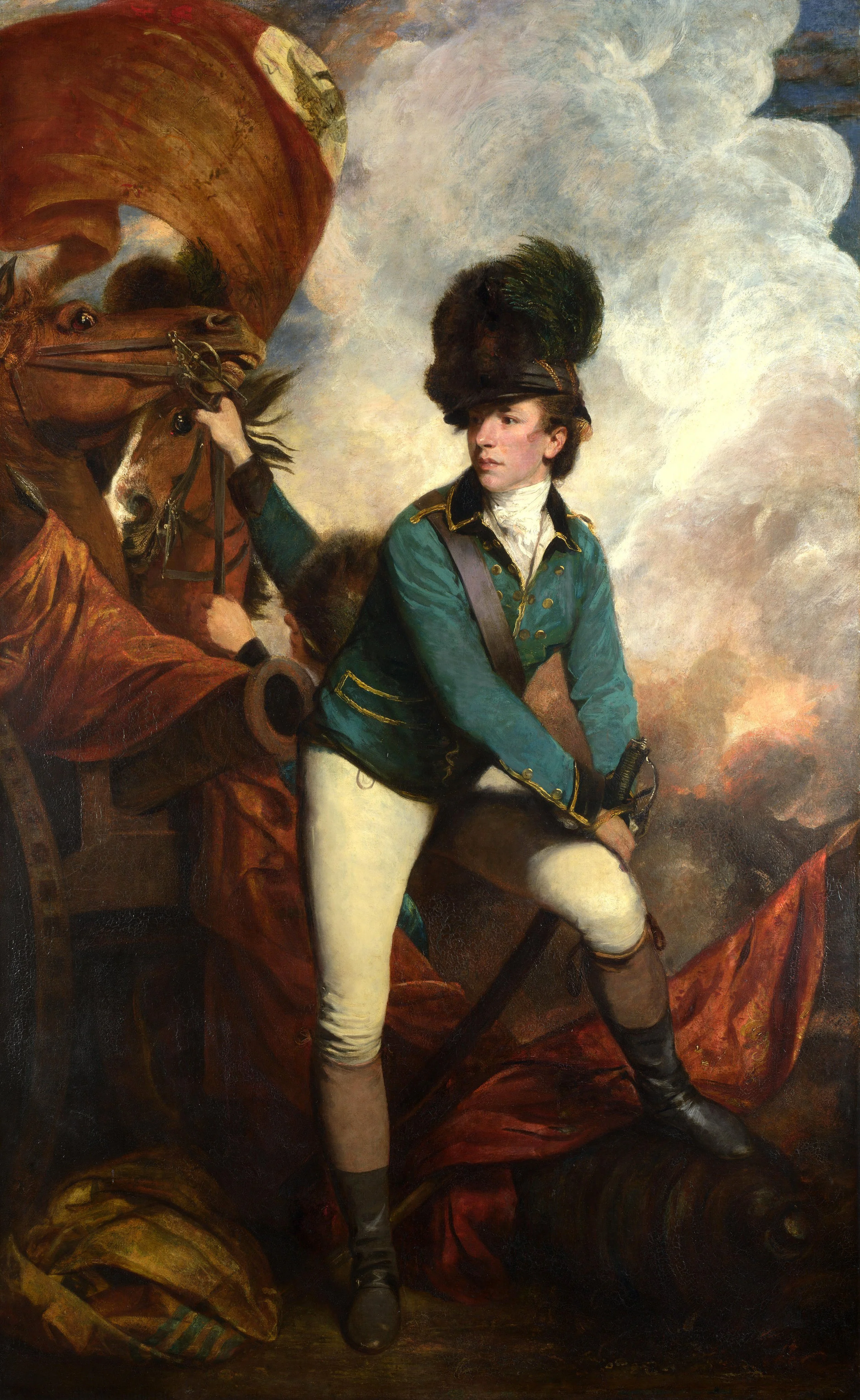
Election to the Virginia Legislature and Capture by British Lt. Col. Banastre Tarleton’s Dragoons. As part of his service during the Revolutionary War, Daniel Boone was elected to the Virginia legislature in 1781 representing Fayette County. When General Cornwallis invaded Virginia in 1781, he ordered Lt. Col. Banastre Tarleton and his dragoons to capture Governor Jefferson and members of the Virginia legislature. On May 7, 1781, the legislature opened but then retreated to Charlottesville from the capital of Richmond. As British troops approached Charlottesville, the legislature quickly adjourned and moved to Staunton. Boone had stayed behind with Jack Jouett to save some horses. On June 4, 1781, Boone was discovered to be a person of interest by the British dragoons, when Jouett addressed him as Captain Boone, and one account says he was addressed as Colonel. He was captured and arrested and held for questioning. Boone was paroled probably after explaining that he received his British appointment as a Captain in 1774 during Lord Dunmore’s War. After his release, he went to Staunton where the legislature was meeting.
Siege of Bryan’s Station and the Battle of Blue Licks in 1782. After the success in October 1781 of the French and Americans at the Siege of Yorktown, Virginia, the British headquartered in Detroit doubled their efforts to drive out the settlements in western Virginia with the aid of their Native allies. They included the Shawnee, Mingo, Wyandot, Miami, Odawa, Ojibwe, and Potawatomi. Captain William Caldwell with a company of Butler’s Rangers and British leaders Alexander McKee and Simon Girty and approximately 300 Indigenous warriors laid siege at Bryan’s Station on August 15, 1782. Lt. Col. Daniel Boone was included in members of the Fayette County militia to ride to the aide of Bryan’s Station, and the siege ended on August 18, when additional militia support arrived. The British and Indian force retreated, and Boone and other militia leaders followed in pursuit with their men. On the morning of August 19, the Fayette and Lincoln County militias were ambushed after they crossed the ford at the Licking River and reached a summit above it. The battle lasted about fifteen minutes, and most of the approximate 100 casualties were members of the Virginia militia. Among the dead were Daniel’s son Israel and Col. John Todd, who commanded the Fayette County militia. As a result of Todd’s death, Boone was appointed Colonel of the Fayette County militia. The Battle of Blue Licks was the last battle of the Revolutionary War.
General George Rogers Clark’s Ohio Campaign in 1782. In response to the August 1782 invasion, General Clark assembled an army of approximately 1,100 men, primarily militia from Fayette, Jefferson, and Lincoln Counties. Boone commanded the militia from Fayette County as a full Colonel. Clark’s army headed north to the Ohio Territory, and by November 1 and assembled at the mouth of the Licking River. They crossed the Ohio River on November 4 and continued north to the Shawnee towns where they arrived on November 10. Upon hearing about the advancing army, the Shawnee chose to retreat and abandoned their villages. Clark and his men wreaked havoc across the area and put at least two thirds of the towns to the torch. On November 15, Clark’s army withdrew and mustered out of service by the end of the month. Since neither the Shawnee nor British would engage in battle, and there were only a few skirmishes, this could not be considered the last battle of the Revolutionary War.
Governmental Appointments as Coroner, Sheriff, and Deputy Surveyor in 1782. In addition to his service in the Virginia legislature, Boone served in additional government capacities during the Revolutionary War. He was appointed Coroner of Fayette County on April 7, 1781, appointed Sheriff of Fayette County in 1782, and, lastly, installed as Deputy Surveyor of Fayette County, Virginia on December 11, 1782.
Sources:
Colonial Office Records, series 2, vol. 20, Reports of the Public Archives of Canada, Canadian Archives, Canada.
Crab, Anne, Warrior-Pioneers: Extracts from the Boone Papers, Volumes 4C-13C of the Draper Manuscripts, Heritage Books, Berwyn Heights, Maryland, 2019.
Draper, Lyman Copeland, Draper Manuscripts, State Historical Society of Wisconsin, Madison, Wisconsin.
Durrett, Rueben T., Young, Bennett H., Stanton, Henry T., and Ranck, George W., Siege of Bryan’s Station and the Battle of Blue Licks: Warfare on the Kentucky Frontier Between Settlers and the British & Their Loyalist, Indian & Renegade Allies, 1782, first published in The Filson Publications Volume 12, Leonour, Ltd., Driffield, United Kingdom, 2011.
Filson, John, The Discovery, Settlement and Present State of Kentucke, Wilmington, Delaware, 1784, Reprint: Cosimo Classics, New York, 2001.
Hammond, Neil O., Daniel Boone and the Defeat at Blue Licks, The Boone Society, Inc., 2005.
Hammond, Neil O., My Father Daniel Boone: The Draper Interviews with Nathan Boone, The University of Kentucky Press, 1999.
Hammond, Neil O. and Taylor, Richard, Virginia’s Western War, 1775-1786, Stackpole Books, Mechanicsburg, Pennsylvania, 2002.
Harrison, Lowell H., George Rogers Clark and the War in the West, The University Press of Kentucky, Lexington, Kentucky, 1976.
James, James Alton, Editor, George Rogers Clark Papers 1771-1781, Virginia Series, Volume III, Illinois State Historical Library, Springfield, Illinois, 1912.
Journal of the Virginia Assembly Session of Nov. 1781 to Jan. 1782, Richmond Virginia.
Kamper, Ken, “An Accurate Summary of the Life of Daniel Boone,” Daniel Boone History Research – Newsletter No. 6, December 2021.
Palmer, William, P. et. Al., eds., Calendar of Virginia State Papers and Other Manuscripts Preserved in the Capitol at Richmond, 1652-1869, Vol. 1
Weiss, Katherine H., Daniel Bryan, Nephew of Daniel Boone: His Narrative and Other Stories, Self-published, Forbestown, CA, 2008.
Winkler, John F., Peckuwe 1780: The Revolutionary War on the Ohio River Frontier, Osprey Publishing, Ltd., Oxford, United Kingdom, 2018.
Young, Chester Raymond, Editor, Westward into Kentucky: The Narrative of Daniel Trabue, The University Press of Kentucky, 1981.